
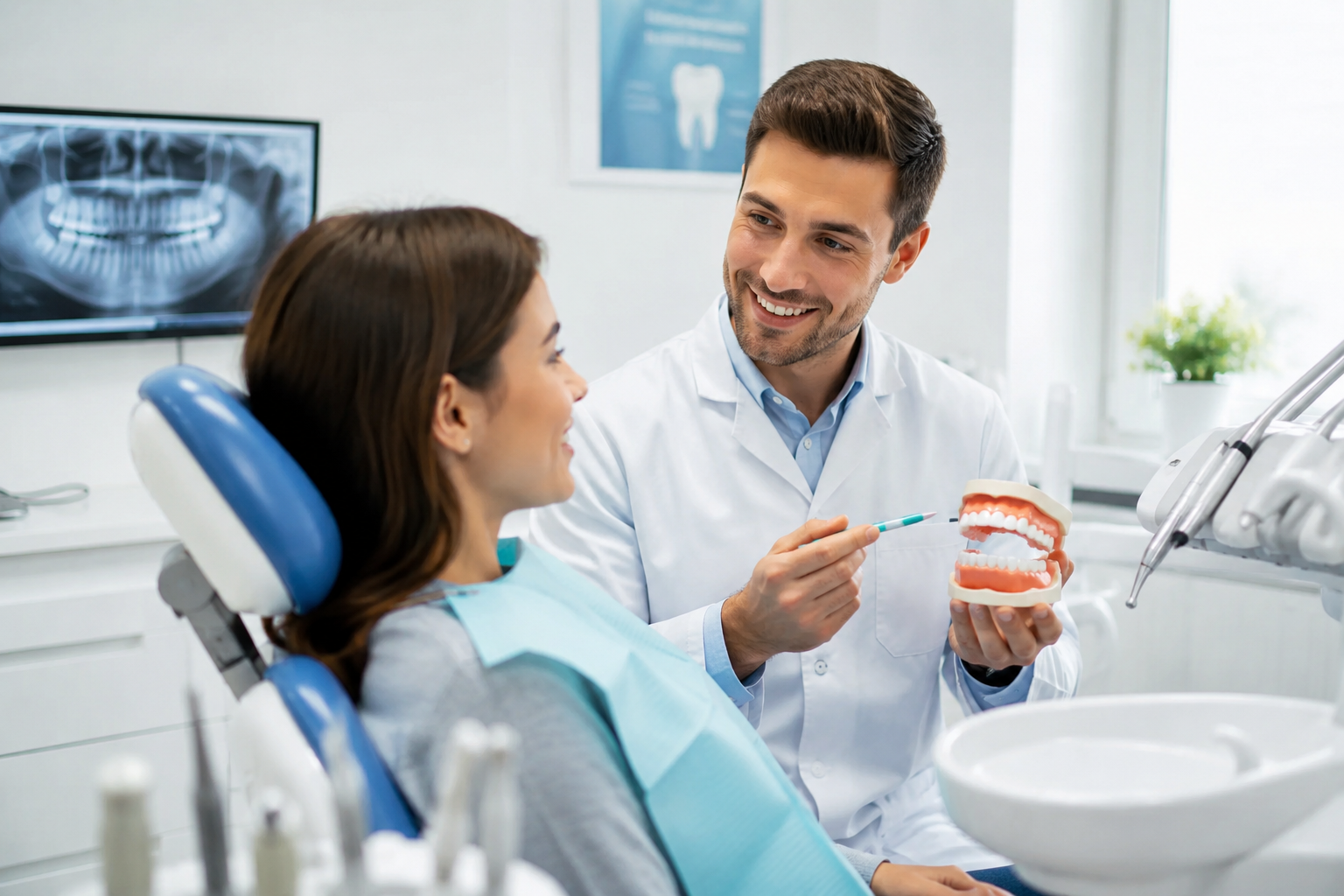
If you’re thinking about dentures in Wilmington, NC, you likely want clear information and compassionate care close to home. This piece guides you through the types of dentures, who benefits from them, how fittings work, and what daily life will feel like so you can decide with confidence.
You can find comfortable, modern denture options in Wilmington that restore chewing, speech, and your smile without unnecessary downtime. Expect explanations of traditional and implant-supported dentures, a step-by-step look at fittings and follow-up care, affordability and insurance tips, and what to expect at your dental appointment.
They explain how local practices use modern technology for better fit and comfort, describe simple care routines to keep dentures lasting longer, and offer practical next steps for scheduling a consultation.
Types of Dentures Available
Patients can choose from removable and fixed options that restore function, appearance, and comfort. The main choices vary by how many teeth are missing, the condition of remaining teeth and bone, budget, and desire for permanence.
Full Dentures
Full dentures replace all teeth in the upper or lower jaw. They sit on the gums and rely on suction, denture adhesive, and proper fit to stay stable. Immediate full dentures can be placed the same day as extractions, but they often need relining after healing to maintain fit.
Modern full dentures use acrylic bases with lifelike tooth shapes and shades chosen to match facial features. They restore chewing and speech but require daily removal for cleaning and occasional adjustments. Patients should expect an adaptation period of weeks for chewing and speaking; follow-up visits ensure comfort and bite alignment.
Partial Dentures
Partial dentures replace one or several missing teeth and attach to remaining natural teeth with clasps or precision attachments. They preserve adjacent tooth position, which reduces shifting and potential bite problems. Materials include metal frameworks for strength or flexible acrylic for comfort and aesthetics.
Partials are removable and easier to repair or adjust than fixed bridges. They offer a cost-effective option when implants are not feasible, but proper oral hygiene of remaining teeth becomes more important to prevent decay or gum disease. Regular dental visits keep fit and function optimal.
Implant-Supported Solutions
Implant-supported dentures anchor to dental implants surgically placed in the jawbone for superior stability. Options include implant-retained overdentures that snap on posts and fixed implant bridges that only a dentist can remove. Implants preserve bone by stimulating the jaw and reduce movement common with traditional dentures.
Candidates need sufficient bone or may require bone grafting before implants. The process involves placement, healing (osseointegration), and attachment phases spanning months. While cost is higher, many patients gain improved chewing efficiency, speech, and confidence, with fewer adjustments over time.
Who Can Benefit From Dentures?
Dentures help people restore chewing, speaking, and appearance after tooth loss. They suit a range of medical and lifestyle situations and can be customized to fit partial or full mouth needs.
Common Reasons for Tooth Loss
Tooth decay and periodontal (gum) disease remain the leading causes of tooth loss. Advanced cavities that reach the pulp or bone infection from periodontitis often require extraction when restorative care no longer protects the tooth.
Trauma from accidents or sports can remove one or several teeth suddenly; dentures provide an immediate functional and cosmetic option. Long-term wear of brittle or extensively restored teeth can also lead to failure, making dentures a practical replacement.
Medical conditions such as uncontrolled diabetes, osteoporosis, and certain cancer treatments increase risk of tooth loss. Medications that reduce saliva or weaken bone can accelerate decay and periodontal breakdown, creating a need for dentures.
Candidacy Considerations
Dentures suit patients missing multiple teeth or an entire arch, but candidacy depends on oral and general health. Dentists evaluate gum health, bone volume, mouth anatomy, and the presence of remaining teeth to determine the right denture type.
Partial dentures anchor to adjacent teeth or implants; full dentures replace all upper or lower teeth. Implant-supported dentures require sufficient jawbone or pre-treatment like bone grafting; these offer greater stability than conventional removable dentures.
Patients with active oral disease typically address infections and inflammation before receiving dentures. Medical history—including diabetes control, smoking, and medications—also affects healing and long-term success, so dentists coordinate care with physicians when needed.
Age and Lifestyle Factors
Older adults commonly need dentures due to cumulative dental wear, past restorative work, and higher incidence of gum disease. Age alone is not a barrier; many seniors adapt well and regain function with properly fitted dentures.
Lifestyle choices influence denture type and maintenance. Smokers face higher implant failure and gum disease risk; heavy coffee or red wine consumption can stain prosthetics and adhesives. Active people who play contact sports may prefer implant-retained options for improved stability.
Work and social needs shape aesthetic preferences. Patients who speak publicly or rely on appearance may prioritize high-end materials and implant support for better comfort and confidence. Dentists discuss daily routines, budget, and long-term maintenance to recommend the most suitable solution.
The Denture Fitting Process
The denture fitting process focuses on accurate measurements, patient comfort, and stepwise adjustments to ensure proper fit and function. It moves from an initial clinical assessment to custom impressions and then to try-ins and refinement.
Initial Consultation Steps
During the first visit, the dentist reviews medical history, current oral health, and patient goals for appearance and function. They perform a full oral exam, including X-rays or CBCT when needed, to evaluate bone levels, any remaining teeth, and potential need for extractions.
The clinician discusses denture types — complete, partial, immediate, or implant-retained — and explains pros and cons for Wilmington-specific factors like smoking, salivary flow, and local weather effects on oral tissues. Cost estimates and treatment timeline are provided, along with an explanation of anesthesia options for any planned extractions.
A preliminary care plan is agreed upon, including pre-denture treatments (fillings, periodontal therapy, extractions). The team answers patient questions about eating, speaking, and expected adjustment time. Clear instructions are given for medical clearance or medication changes if needed.
Impressions and Customization
Impressions start with stock trays to record preliminary arch shape, followed by custom trays fabricated for a more precise secondary impression. The dentist uses materials such as polyvinyl siloxane or alginate depending on the stage and required detail.
Jaw relation records are taken to establish vertical dimension and centric relation. The clinician records bite rims while the patient sits upright and speaks to achieve natural lip support and proper tooth display. Shade selection and tooth mold choices are made using daylight or shade guides so the final esthetics match skin tone and facial features.
Lab technicians create a wax denture setup from these records. Patients receive clear timelines for lab work and interim prostheses when needed. Communication between dentist and lab is emphasized to transfer exact measurements and esthetic preferences.
Try-In and Adjustments
At the wax try-in appointment, teeth position, bite, and lip support are evaluated. The dentist checks phonetics by having the patient read specific words and sentences to confirm speech patterns like “s” and “f” sounds.
After laboratory processing, the final denture is seated and primary adjustments address sore spots, pressure areas, and occlusion. The clinician uses selective grinding and relining techniques as needed and instructs the patient on insertion, removal, and daily cleaning routines.
Follow-up visits are scheduled at 24–72 hours, one week, and one month to monitor tissue response and make further refinements. For persistent instability, options discussed include soft liners, relines, or conversion to implant-retained overdentures. The team encourages questions and provides contact information for any acute discomfort.
Caring for Your New Smile
This section covers practical steps for keeping dentures clean, managing soreness or necessary adjustments, and knowing when to return to the dentist for care. Follow straightforward routines and watch for specific signs that require professional attention.
Cleaning and Maintenance Tips
They should rinse dentures after every meal to remove food particles. Use a soft denture brush or a regular toothbrush with non-abrasive denture cleanser; avoid regular toothpaste, which can scratch acrylic. Clean both surfaces of the denture—inner surfaces that contact gums and outer teeth surfaces.
Soak dentures nightly in a commercial denture-soaking solution or plain water if the product instructions advise. Remove adhesive buildup weekly by brushing with cleanser and rinsing thoroughly before reinserting. Store dentures in a labeled container filled with water overnight to prevent warping.
Care for natural mouth tissues too: brush gums, tongue, and roof of mouth with a soft toothbrush each morning to stimulate circulation and remove plaque. Replace denture brushes every 3–6 months or sooner if bristles fray. Schedule professional denture cleaning and inspection at least once a year.
Handling Soreness or Adjustments
Initial soreness is common during the first few weeks as oral tissues adapt. They should use a warm salt-water rinse (1/2 teaspoon salt in 8 ounces warm water) several times daily to reduce irritation and clean the area. Avoid OTC topical anesthetics unless instructed by a dentist.
If pressure points or persistent sore spots develop, they must contact the dentist for an adjustment rather than trying to modify the denture at home. Do not attempt to trim or alter dentures with tools; improper changes can cause damage and poor fit. Use a small amount of denture adhesive for temporary stability if the dentist approves, following product directions precisely.
Keep a diary of when pain occurs (time of day, activity such as chewing, specific foods) and any loose areas. Bring this information to the appointment to help the clinician identify and correct problem zones. If they experience significant swelling, bleeding, or signs of infection, seek care promptly.
When to Visit Your Dentist
They should schedule a follow-up visit about one week after receiving new dentures to check fit and tissue response. Regular dental checkups every 6–12 months are important even without natural teeth because changes in bone and gum contours affect fit over time.
Make an appointment sooner for any of the following: persistent pain beyond two weeks, new rubbing sores, sudden looseness that affects speech or chewing, broken or cracked dentures, or difficulty breathing due to ill-fitting prosthesis. Bring the denture, the storage container, and notes on symptoms to the visit.
Inform the dentist about changes in general health or medications, as these can alter saliva flow and tissue health, affecting denture comfort. The dental team can adjust, reline, or recommend replacements based on wear, fit, and oral health changes.
Modern Technology in Denture Design
New digital tools and improved materials make dentures fit better, feel more natural, and require fewer adjustments. Patients in Wilmington can expect precise digital scans, faster fabrication, and lighter, more durable materials that reduce soreness and improve chewing.
Digital Imaging Innovations
Clinics now use intraoral scanners to capture the mouth in high-resolution 3D images instead of messy traditional impressions. These scanners record fine ridge detail and bite relationships, which helps laboratories design dentures that match a patient’s anatomy more closely.
Digital workflows also include CAD/CAM software that virtualizes tooth arrangement and base contours. Technicians can preview esthetics, adjust tooth position, and simulate jaw movement before milling or 3D printing, reducing trial-and-error visits.
Many Wilmington practices link digital scans to 3D printers to produce try-in models or final prostheses quickly. This shortens turnaround time and lowers the risk of remakes, keeping follow-up appointments focused on minor fit refinements.
Advanced Materials for Comfort
New denture bases use high-impact acrylics and flexible thermoplastics that resist fracture while conforming more comfortably to gum tissue. These materials distribute chewing forces more evenly, reducing sore spots for patients who previously experienced pressure-related pain.
For artificial teeth, modern composite and hybrid ceramic teeth offer improved wear resistance and color stability compared with older acrylic teeth. They maintain occlusion longer and look more natural under different lighting conditions.
Implant-retained overdentures also benefit from precision attachments made from durable alloys and resilient polymers. These attachments provide stable retention with controlled resilience, improving chewing efficiency and patient confidence without feeling rigid.
Affordability and Insurance Considerations
Costs, financing, and insurance determine whether patients actually get dentures. Clear numbers, common payment methods, and realistic expectations about insurance help people plan for care without surprises.
Typical Price Ranges
Complete removable dentures in Wilmington typically range from $800 to $3,000 per arch depending on materials and lab work. Economy acrylic sets at local clinics often start near $800–$1,200 per arch, while higher-end, processed acrylic or cosmetic teeth can run $1,500–$3,000 per arch.
Implant-supported overdentures carry higher costs: expect $4,000–$15,000 per arch when factoring two or more implants plus the prosthesis. Immediate dentures (made quickly after extractions) may cost more because of additional adjustments. Routine follow-ups and relines average $100–$400; repairs commonly fall between $50–$200.
Clinics that advertise “free consults” usually still charge for impressions and X-rays if treatment proceeds, so ask for an itemized estimate before agreeing to work.
Payment Options for Patients
Many Wilmington dental practices accept major credit cards and cash; some offer in-office payment plans that split treatment into 3–12 monthly payments with no interest. Patients with limited budgets can use third-party medical financing (e.g., CareCredit) to extend payments over 6–60 months; terms and interest vary, so compare offers.
Tax-advantaged accounts like Health Savings Accounts (HSA) or Flexible Spending Accounts (FSA) commonly cover dentures and related procedures, reducing out-of-pocket cost. Seniors on fixed incomes should ask about sliding-scale clinics, community health centers, or dental schools that provide supervised care at reduced fees.
Always request a written payment agreement that lists total cost, down payment, monthly amounts, and any fees for missed payments or cancellations.
Insurance Coverage Insights
Most private dental insurance plans cover part of the cost for dentures, typically paying 40%–80% of the prosthesis after deductibles and waiting periods. Coverage caps often apply; annual maximums (commonly $1,000–$2,000) may not cover full denture treatment, especially when implants are involved.
Medicare generally does not cover routine dental prosthetics, including dentures; patients should not rely on Medicare for denture costs. Medicaid coverage varies by state—North Carolina’s Medicaid program may provide limited coverage for adults in specific circumstances, so beneficiaries must verify eligibility and prior-authorization requirements.
Before treatment, patients should obtain a pre-treatment estimate from their insurance and get predetermination from the dentist’s office to confirm benefits, deductibles, and any required documentation.
Life With Dentures in Wilmington
Living with dentures in Wilmington involves learning daily habits, choosing local care options, and using community resources that make wearing and maintaining dentures easier. Practical tips on eating, speaking, cleaning, and where to get timely help follow.
Adapting to Daily Activities
Dentures require a short adjustment period for chewing and speaking. Start with soft foods like cooked vegetables and fish, cut into small pieces, and gradually reintroduce tougher items. Chew on both sides to balance pressure and avoid dislodging the denture.
Expect increased saliva and minor irritation at first; warm salt rinses and over-the-counter oral gels help soothe sore spots. Use denture adhesive sparingly only if recommended by the dentist — too much can cause instability or hygiene issues.
Practice speaking by reading aloud or repeating troublesome words; most people regain normal speech in days to weeks. Maintain nightly removal and cleaning routines: brush the denture with a nonabrasive cleaner and soak overnight in a denture solution to remove biofilm and stains.
Schedule a follow-up with the Wilmington prosthodontist or dental office within two weeks of insertion to check fit, bite, and sore areas. Periodic relines or adjustments every 1–3 years may be needed as the jawbone changes.
Local Support Resources
Wilmington offers several local supports for denture wearers, from dental clinics to patient education programs. Cape Fear Community College dental hygiene clinic and volunteer dental events provide low-cost cleaning and basic care for eligible residents.
Private practices like family dentistry offices often provide same-city relines, emergency repairs, and routine checkups; confirm they offer denture maintenance before scheduling. Pharmacies across Wilmington stock denture adhesives, cleaning tablets, and repair kits for quick fixes.
Community centers and senior services in New Hanover County sometimes host oral-health workshops; check the county website or local senior center calendars for upcoming sessions. For urgent problems after hours, local emergency dental clinics and hospital dental services can assist with painful ulcers, broken dentures, or acute infections.
If transportation is a concern, many Wilmington offices partner with rideshare programs or local transit options; ask the dental office about accessible appointment times and any available patient assistance.
What to Expect at Your Dental Appointment
Patients arrive and check in with friendly staff who confirm medical history and insurance details. A short wait often follows while the team prepares the treatment room.
The dentist or prosthodontist conducts an initial exam, including X-rays if needed. They discuss oral health, denture options, and any concerns the patient mentions.
If impressions are required, the hygienist takes them using a comfortable, quick tray process. Patients are told what to expect during setting and how long impressions usually take.
For immediate or same-day denture procedures, the clinician explains the workflow and timelines. Patients receive clear instructions about anesthesia, expected sensations, and recovery steps.
A treatment plan is reviewed in plain language with costs and payment options. They answer questions and obtain informed consent before proceeding.
Post-procedure care instructions come both verbal and in writing. This includes cleaning tips, adjustment timelines, and signs that warrant a follow-up visit.
Follow-up appointments are scheduled to check fit and comfort, and to make minor adjustments. The clinic emphasizes preventive care and offers guidance on long-term denture maintenance.
Patients are encouraged to ask questions and call the office with concerns. A gentle invitation to schedule a consultation or request more information appears at the end of the visit.
Next Steps Toward a Confident Smile
They should start by scheduling a consultation with a Wilmington, NC dental office that offers denture services. A short exam and discussion of goals lets the dentist recommend full, partial, or implant-supported dentures tailored to lifestyle and budget.
Patients can prepare questions in advance to make the visit efficient. Suggested topics: expected timelines, cost estimates, care routines, and options for sedation or same-day prostheses.
The clinic will likely perform impressions and bite records to ensure a proper fit. Modern labs and digital scans improve comfort and reduce adjustment visits.
After delivery, follow-up appointments refine fit and function. Minor sore spots and speaking adjustments are common and typically resolved within a few visits.
Daily care preserves denture longevity and oral health. They should clean dentures nightly, handle them gently, and maintain regular checkups to monitor tissue changes and oral cancer screening.
If implant-supported dentures are an option, the treatment plan will include imaging and a surgical timeline. Implants increase stability and may improve chewing, but they require surgical assessment and healing time.
Encourage them to call the Wilmington practice for an initial phone consult or to book an appointment. Friendly staff can explain financing, welcome new patients, and address any immediate concerns.
Frequently Asked Questions
Patients often ask about cost, types of dentures, gum-health suitability, comfort options, timelines, and what to expect during adjustment. Clear answers help them weigh practical choices and plan visits with confidence.
How much do dentures typically cost, and what factors can change the price?
Traditional full dentures in Wilmington, NC commonly range from $800 to $3,000 per arch, depending on materials and lab work.
Partial dentures typically cost $600 to $2,500, while implant-supported dentures usually start around $3,000 per implant and can exceed $20,000 for a full-arch treatment with multiple implants.
Costs vary by the number of arches, tooth materials (acrylic vs. porcelain), precision attachments, lab fees, and whether extractions, bone grafting, or CT scans are needed. Dental insurance, Medicare (limited), and financing plans can reduce out-of-pocket expenses.
What’s the difference between full dentures, partial dentures, and implant-supported dentures?
Full dentures replace all teeth in the upper or lower arch and rest on the gums and underlying bone.
Partial dentures fill gaps when some natural teeth remain and typically attach with metal clasps or precision connectors.
Implant-supported dentures anchor to dental implants placed in the jaw, providing greater stability, bite force, and bone preservation. They cost more but reduce slipping and improve chewing compared with removable options.
How do I know if dentures are the right option if I have gum disease or periodontal issues?
If periodontal disease is active, dentists first treat infection with deep cleanings, antibiotics, or surgery to control bone and gum loss.
Once periodontal health is stabilized, clinicians evaluate whether remaining teeth can be saved or if extractions and dentures provide a better long-term outcome.
A thorough exam, periodontal charting, and X-rays determine candidacy for conventional dentures or implants; severe bone loss may require grafting before implants are possible.
What are the most comfortable denture options available today, and how do I choose?
Soft-lined dentures use a cushioning material against gums to reduce pressure and increase comfort for sensitive tissues.
Precision dentures with custom-milled bases and tighter tolerances also improve fit and reduce movement.
Implant-supported overdentures provide the best comfort and function for many patients by securing the denture to implants, which minimizes sore spots and improves chewing. Choice depends on oral anatomy, budget, and lifestyle — a consultation clarifies which option matches the patient’s needs.
How long does it take to get new dentures from the first visit to the final fit?
Simple denture cases typically take 4 to 8 weeks from initial impressions to delivery, including try-ins and adjustments.
Complex cases that require extractions, healing time, grafting, or implant placement can take several months to a year.
Immediate dentures can be placed the same day as extractions but usually require more post-delivery adjustments because tissues change during healing. The dentist will outline a timeline based on the chosen treatment plan.
What should I expect during the adjustment period, and how can I prevent sore spots or slipping?
Expect two to eight weeks of adaptation with increased saliva, changes in speech, and mild soreness as the mouth adjusts.
Regular short practice sessions for eating and speaking speed recovery; start with soft foods and progress to firmer items as comfort improves.
If sore spots or persistent slipping occur, schedule follow-up adjustments — relining, rebasing, or minor reshaping often resolves pressure points. For recurring problems, consider implant support to stabilize the denture and reduce tissue irritation.